A podcast can have a great name, expensive microphones, professional artwork, and three guests already booked—and still have no clear concept.
That becomes a problem pretty quickly.
Because once the excitement of launching wears off, you still have to decide what to talk about next week. And the week after that. You need to know who the episode is for, why they should care, which guests make sense, what the podcast is supposed to accomplish, and what doesn’t belong on the show.
That is what your podcast concept should solve.
A strong podcast concept defines what the show is, who it serves, why it exists, what listeners can expect from it, and what kind of content belongs inside it.
Before you worry about microphones, cameras, cover art, or distribution, get those decisions clear.
What Is a Podcast Concept?
A podcast concept is the core idea and operating direction behind your show.
It goes beyond choosing a topic.
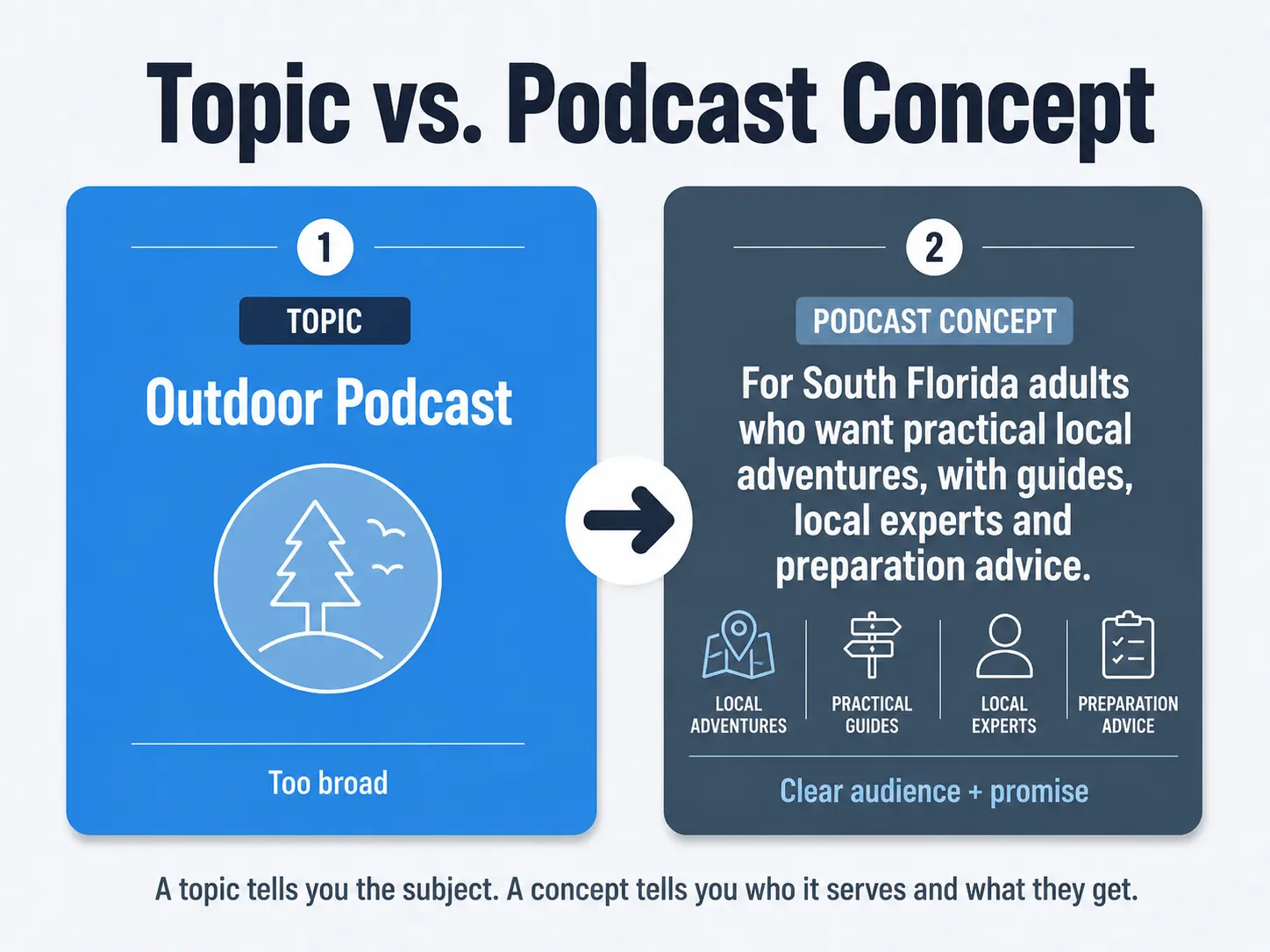
“Entrepreneurship” is a topic.
“Interviews with entrepreneurs” is a format attached to a topic.
Neither one tells me exactly who should listen, what the listener gets, why this particular show needs to exist, or what kind of conversations belong on it.
A usable podcast concept answers questions like:
- Who is this show for?
- What problem, interest, or desired outcome connects those listeners?
- What job should the podcast perform?
- What will the listener consistently get from the show?
- What subjects belong on the podcast?
- What subjects don’t?
- What format will best deliver that value?
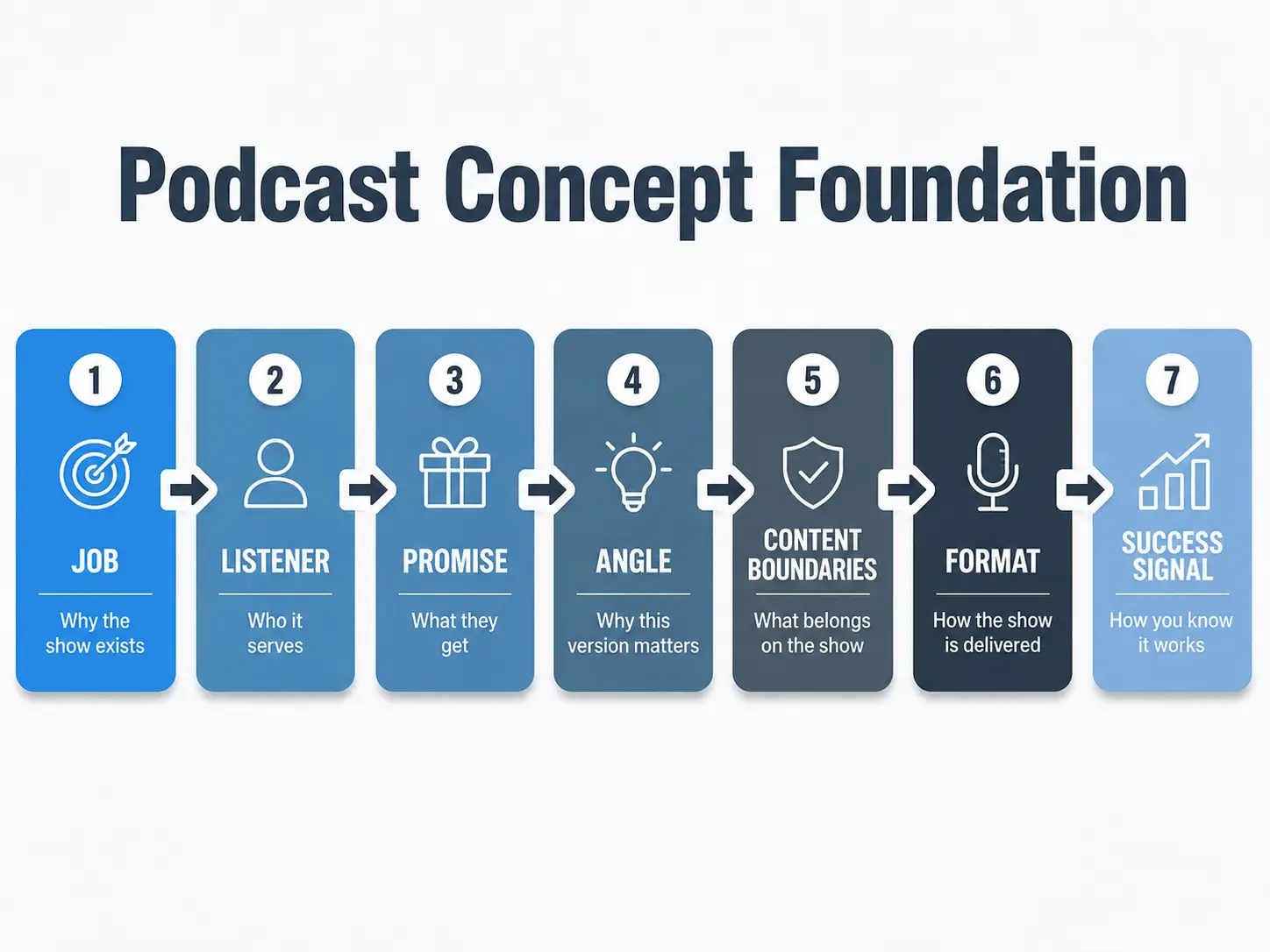
A podcast concept isn’t one isolated decision. You start with why the show exists and who it’s for, but those decisions eventually affect your positioning, content, format, calls to action, and even how you measure whether the podcast is working. That’s why I treat the concept as the foundation of a larger podcast business system rather than just a topic-selection exercise.
This is part of podcast pre-production, even though it happens long before you create an episode outline.
You’re making the decisions that the rest of the production process will eventually have to follow.
Start With the Job of the Podcast
Before asking, “What should my podcast be about?” ask a more useful question:
Why should this show exist?
A podcast connected to a business, expertise, organization, or mission can perform many different jobs.
It might help you:
- educate prospective customers;
- establish authority around a subject;
- build an email audience;
- deepen relationships with an existing community;
- answer questions customers repeatedly ask;
- create useful content that can be repurposed elsewhere;
- generate inquiries or registrations;
- support a product or service;
- develop relationships with guests and partners.
You don’t need every one of those.
In fact, trying to accomplish all of them at once usually makes the concept less clear.
Choose the primary job first.
For example, imagine a local outdoor retailer in South Florida wants to start a podcast.
“Let’s make an outdoors podcast” isn’t much of a strategy.
But suppose the primary job is to become a trusted local resource for people looking for practical weekend outdoor activities.
Now the concept starts to take shape.
The podcast can teach. It can build a local community. It can introduce listeners to places, activities, experts, and events.
Eventually, some of those listeners may join the email list, attend an event, visit the store, or buy something.
Those are possible business pathways.
But the immediate job of the show is clear: become a useful local resource.
That’s a much better starting point than “we need a podcast.”
For a business-focused show, this is also why measuring success only through downloads can be limiting. Podcast ROI can include value beyond CPM and raw audience size.
Define the Listener Before You Build the Episode List
Once you know why the show exists, decide whom it’s for.
This doesn’t mean creating a ridiculous fictional avatar with a favorite breakfast cereal and the exact model of SUV they drive.
You need enough specificity to make useful editorial decisions.
“Everyone interested in business” is usually too broad.
“People trying to become better leaders” is somewhat better.
“First-time managers trying to lead a small team without feeling completely unprepared” gives you far more direction.
Now you can imagine the questions they ask.
You can identify problems they recognize.
You can choose examples that make sense to them.
And you can reject episode ideas that might be interesting but don’t serve that listener.
For our hypothetical outdoor retailer, the audience might become:
South Florida adults looking for approachable local outdoor activities they can realistically enjoy on weekends.
That’s far more useful than “people who like the outdoors.”
Decide What the Listener Should Get From the Show
Next, define the result of listening.
Not a guaranteed business result.
Not “this podcast will change your life.”
Just the useful outcome the show is designed to provide.
Ask:
What should somebody understand, know, feel prepared to do, or decide more confidently because they listen to this podcast?
For the outdoor show, the promise might be:
Help South Florida listeners find, prepare for, and enjoy better local outdoor experiences.
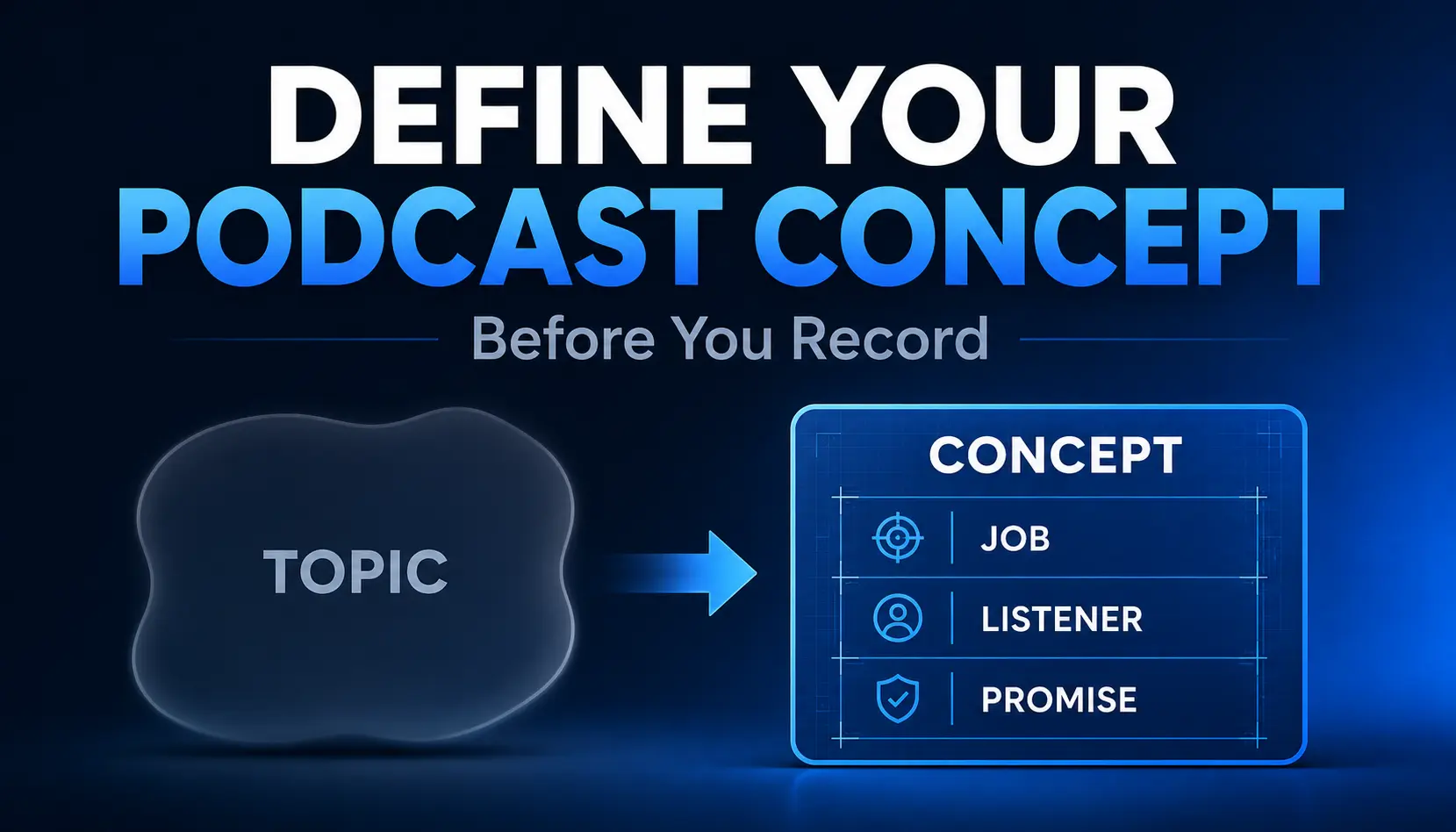
Now the concept has three important pieces:
Job: Become a trusted local outdoor resource.
Listener: South Florida adults looking for practical weekend adventures.
Promise: Help them find, prepare for, and enjoy those experiences.
We’re getting somewhere.
Create a One-Sentence Podcast Concept
Once those decisions are clear, put them together.
You can use this simple formula:
This is a podcast for [listener] that helps them [outcome] through [type of content, perspective, or approach].
For example:
This is a podcast for South Florida adults who want to get outdoors more often, helping them discover local adventures and prepare for them through practical guides, expert conversations, and firsthand local knowledge.
It doesn’t need to be your final public podcast description.
That’s not the point.
This sentence is an internal test.
If you can’t explain the podcast clearly in one or two sentences, there’s a decent chance the concept still needs work.
Give the Show an Angle
Two podcasts can serve similar audiences and still be completely different shows.
Your angle is how you approach the subject.
Maybe your version is unusually practical.
Maybe it’s local.
Maybe it’s based on decades of firsthand experience.
Maybe you challenge conventional advice in the category.
Maybe you simplify a subject that is usually explained badly.
Maybe you combine perspectives that normally stay separate.
This matters because “another podcast about marketing” doesn’t give a listener much reason to choose you.
The topic tells them the category.
The angle tells them what kind of experience they’re getting from you.
For our outdoor example, the angle might be:
Local, practical adventures that ordinary people can actually do this weekend—not extreme expeditions requiring $8,000 in gear and a Sherpa.
Now I can hear the show a little better.
That’s what you want.
Create Content Boundaries Before You Create 100 Episode Ideas
A good concept should generate ideas.
It should also reject them.
That’s important.
If virtually any subject could fit your show, you probably haven’t defined the show tightly enough.
Create a few recurring content lanes.
The outdoor podcast might cover:
- local destinations;
- beginner preparation;
- outdoor skills;
- seasonal conditions;
- conversations with local experts;
- practical gear education.
Now test the concept.
Try writing 15 to 20 legitimate episode ideas.
If you can’t get past five without stretching the subject, the concept may be too narrow.
If you produce 75 ideas that have almost nothing in common, it may be too broad.
You’re looking for enough room to create consistently without losing the central promise.
This is where your concept starts becoming an editorial system instead of an idea scribbled into your Notes app.
Choose the Format After You Understand the Concept
Solo show?
Interviews?
Co-hosts?
Video?
Short weekly episodes?
Long monthly conversations?
Those are important decisions, but they should support the concept rather than define it.
If your main value comes from teaching something you already know, solo episodes may be the easiest way to establish the show clearly. That’s one reason I often like new hosts to develop some solo podcasting skills early.
If the value comes from bringing together specialized perspectives, interviews may play a bigger role.
If the show depends on debate or chemistry between two people, a co-host format may make sense.
The format should help deliver the promise.
It also has to be sustainable.
A brilliant podcast concept that requires eight hours of production every week when you have two hours available isn’t really a working concept yet.
Decide What Success Would Look Like
This is the part many podcast concepts leave out completely.
Suppose the show launches.
Six months later, how will you decide whether it’s doing its job?
Downloads can tell you something about consumption and reach.
They don’t answer every question.
Depending on the podcast’s job, other useful signals might include:
- email signups;
- resource downloads;
- event registrations;
- inquiries;
- referrals;
- customer questions;
- sales conversations;
- reusable content created from episodes;
- relationships developed through guests;
- direct feedback from listeners.
Don’t invent a giant dashboard before you’ve recorded episode one.
Just make sure the podcast has some connection to an outcome you actually care about.
Otherwise, you can end up publishing every week while quietly wondering why you’re doing all this work.
Run This Quick Podcast Concept Test
Before moving forward, see whether you can answer these questions without a 20-minute explanation:
- Why does this podcast exist?
- Who specifically should listen?
- What should that listener consistently get from it?
- What makes this version of the subject worth choosing?
- What kinds of episodes clearly belong on the show?
- What kinds of episodes don’t belong?
- Can the concept support plenty of useful future episodes?
- Can you realistically produce the format?
- What evidence would suggest the podcast is doing its job?
If several of those answers are still fuzzy, don’t rush to fix the problem with branding.
A clever name won’t solve it.
Neither will a new microphone.
Clarify the concept first.
Your Podcast Concept Is a Foundation, Not a Prison
Your concept can evolve.
Businesses change.
Audiences change.
You learn things after publishing that you couldn’t have known before publishing.
The goal isn’t to predict the next five years perfectly.
The goal is to make the next set of decisions from a clear starting point.
You want enough structure that episode ideas, guests, hooks, production choices, calls to action, and promotion can all point in roughly the same direction.
And if you later discover that direction needs to change, change it deliberately.
That’s very different from rebuilding the show every Tuesday because nobody decided what it was in the first place.
What Should You Do After Defining the Concept?
Once your concept is clear, you can start turning it into the actual show: name, description, format, episode plan, production workflow, launch material, and publishing system.
My complete How to Start a Podcast Blueprint walks through the broader process.
If you want help turning the concept you’ve just created into a clear public description, the Free Podcasting Pro Tips Vault includes The Producer Framework: How to Write a High-Converting Podcast Description.
Open the Free Podcasting Pro Tips Vault
The main thing is to do this work before you start throwing episodes at the wall.
Define the show first.
Then build the production around it.
Frequently Asked Questions
What is a podcast concept?
A podcast concept is the central definition of what your show is, whom it serves, why it exists, what listeners can expect, and what kind of content belongs on it. It is broader than simply choosing a topic or format.
How specific should a podcast concept be?
It should be specific enough that the right listener can recognize why the show is relevant, but broad enough to support a healthy supply of future episodes. A useful test is whether you can generate 15 to 20 genuinely relevant episode ideas without stretching the concept.
Can I change my podcast concept after launching?
Yes. A concept should provide direction, not trap you permanently. If your audience, business, expertise, or evidence changes, you can refine the concept deliberately rather than allowing the show to drift without a clear reason.