How long should a solo podcast episode be?
There isn’t one number that’s right for every episode. A better way to choose the length is to decide what the episode actually needs to accomplish.
If you’re explaining one small idea, you may only need three to five minutes. If you’re teaching a complete process, you may need 10 or 15. If the subject genuinely needs examples, interpretation, and a stronger point of view, 20 minutes may make perfect sense.
The mistake is deciding that every solo episode needs to hit some predetermined runtime.
Instead, match the length to the job.
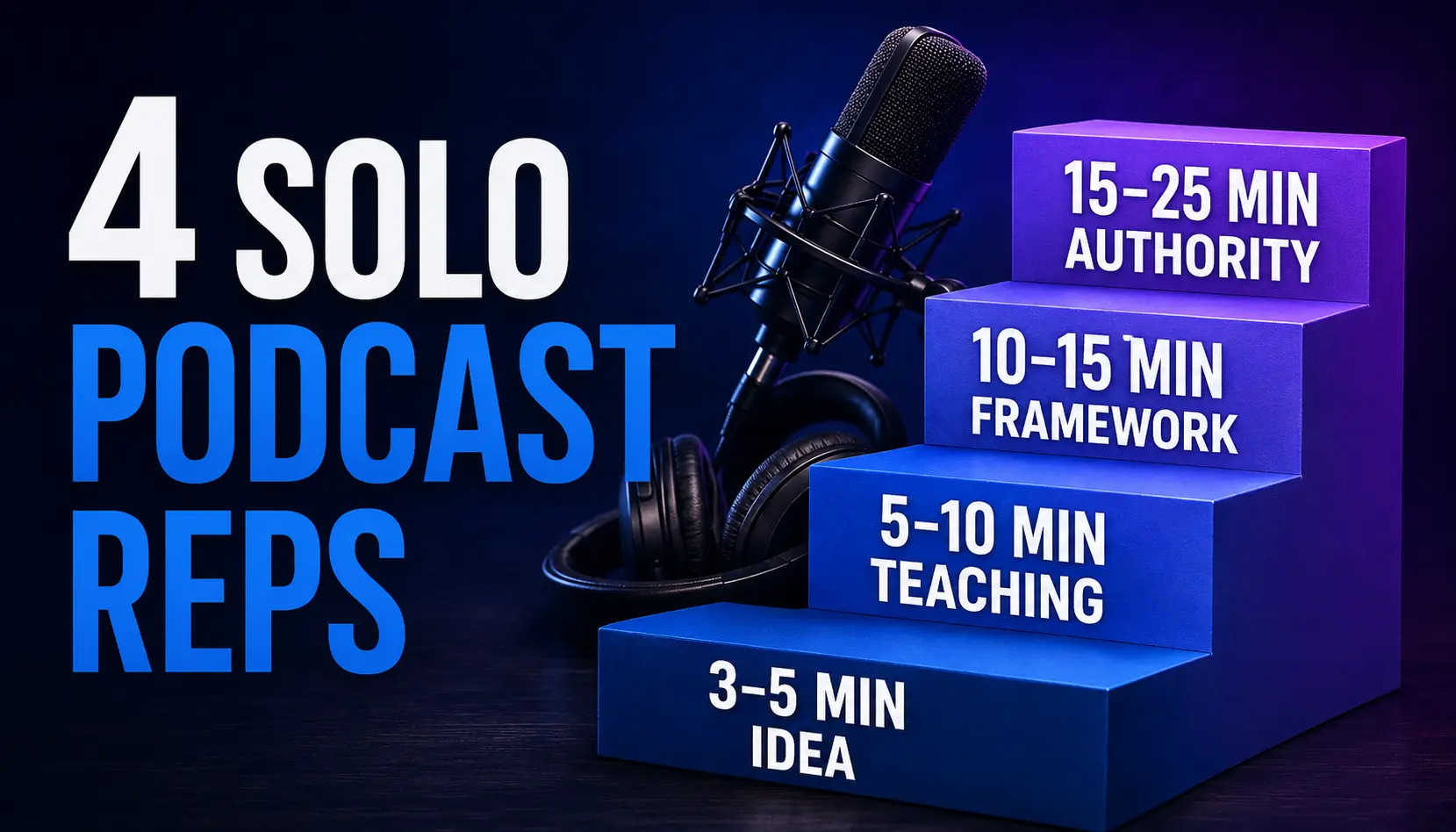
A Simple Solo Podcast Length Guide
Here’s a useful starting point:
| Episode length | Best job | Skill you’re practicing |
|---|---|---|
| 3–5 minutes | One idea, answer, mistake, or reminder | Finish |
| 5–10 minutes | Teach one useful concept | Clarity |
| 10–15 minutes | Explain a method, process, or framework | Structure |
| 15–25 minutes | Add depth, examples, interpretation, and point of view | Authority |
These aren’t universal podcasting rules.
Think of them as useful constraints. They force you to decide what the episode is really supposed to do before you start recording.
VIDEO EMBED — Place the full YouTube episode here.
This is the best embed location because the reader has already received the quick answer and can either watch the full teaching or continue into the detailed breakdown.
3–5 Minutes: Practice Finishing One Useful Idea
If you’re still getting comfortable recording alone, don’t start by challenging yourself to fill 45 minutes.
Start by finishing.
Choose one small idea and take it all the way from beginning to end.
You could:
- answer one common question;
- explain one mistake;
- share one lesson;
- give one practical reminder.
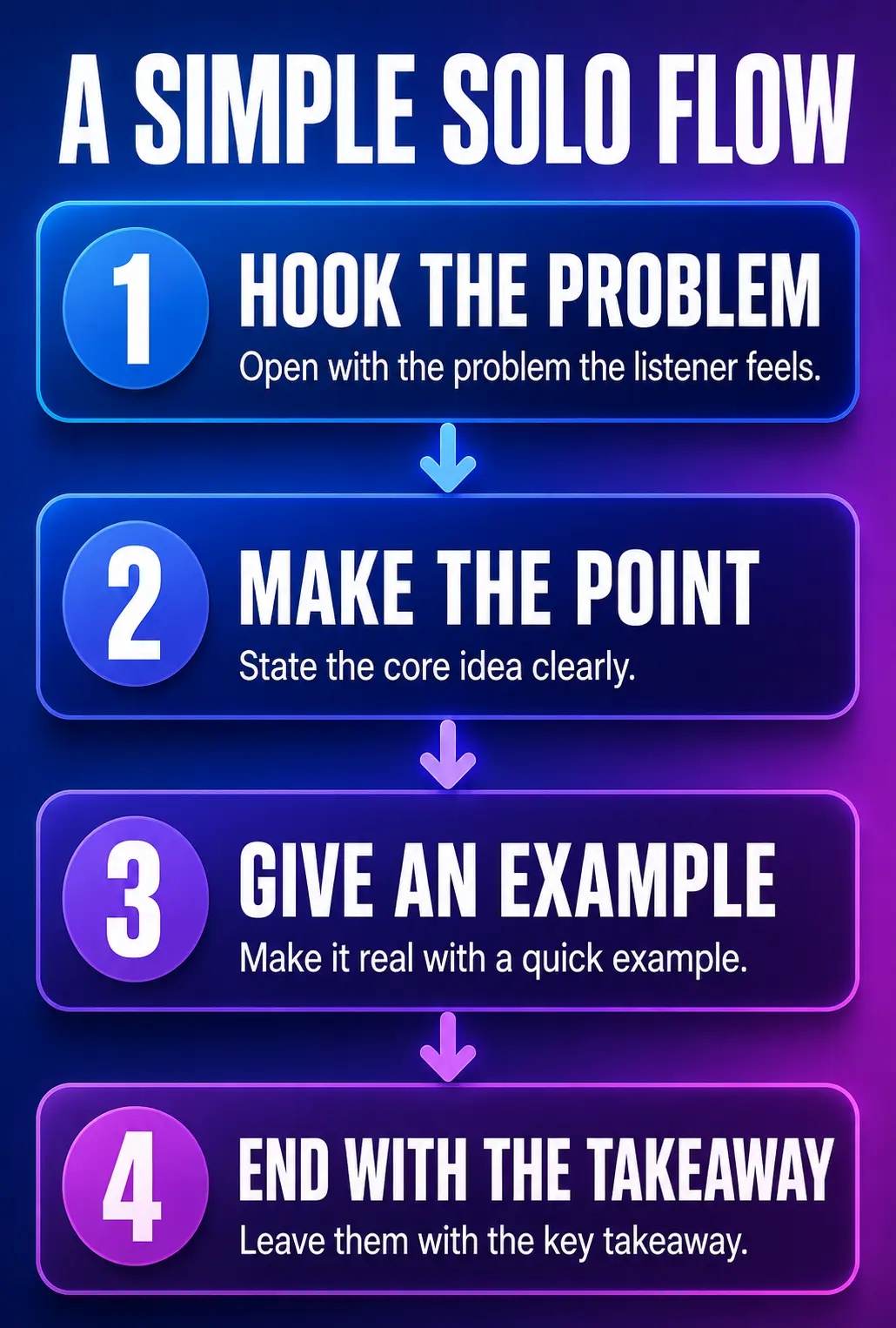
A simple structure is enough:
Hook the problem → Make the point → Give an example → End with the takeaway
That’s a complete episode.
Short doesn’t automatically mean incomplete. If the episode performs one useful job, it has done what it was supposed to do.
This is also why I recommend that new hosts get some solo recording experience instead of immediately depending on guests to carry every episode. I go deeper into that in why you should start with solo podcast episodes.
5–10 Minutes: Practice Teaching Clearly
Once you can finish one short idea without constantly starting over, give yourself a little more room.
A five-to-ten-minute solo episode is useful when one concept needs explanation but doesn’t require a massive deep dive.
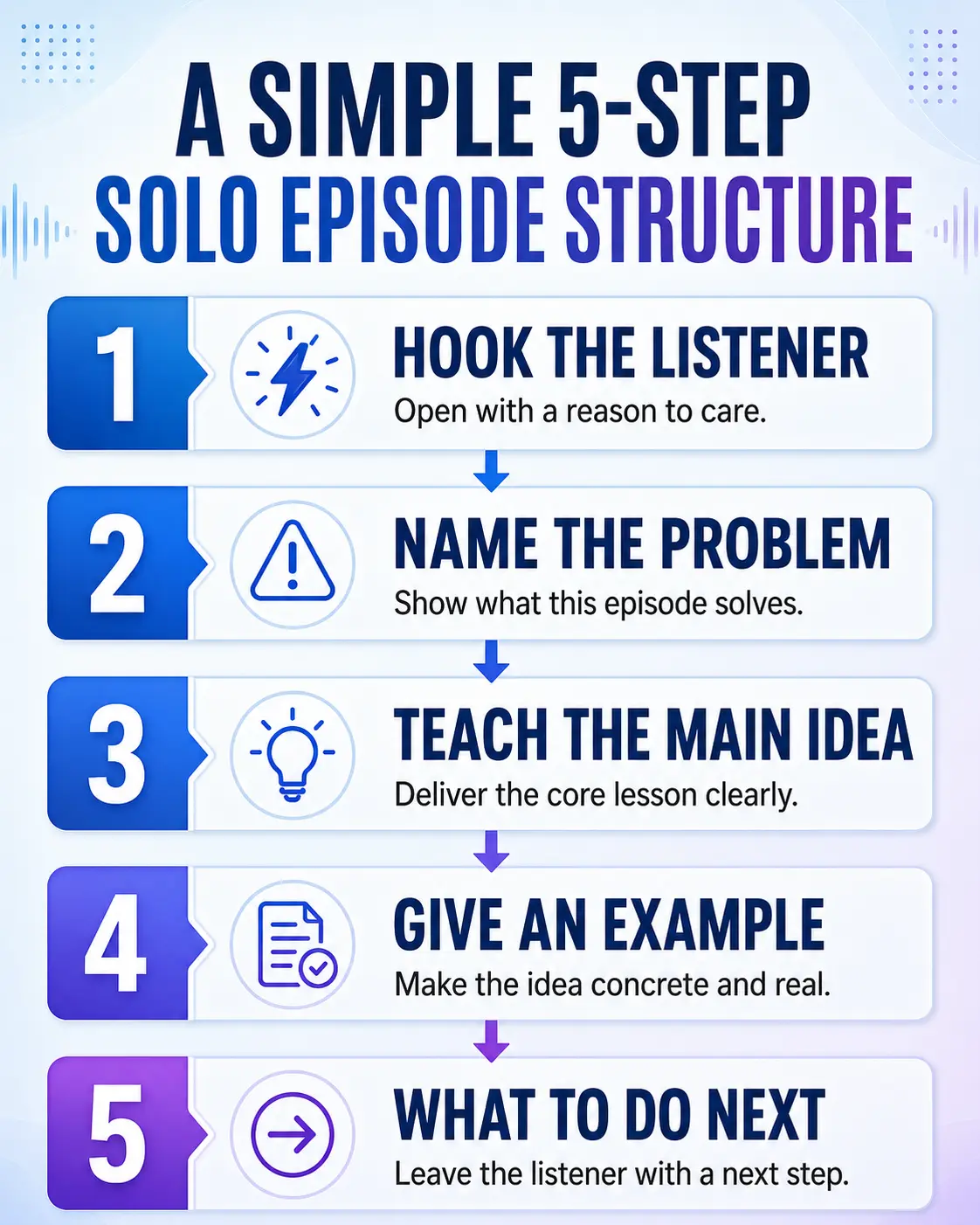
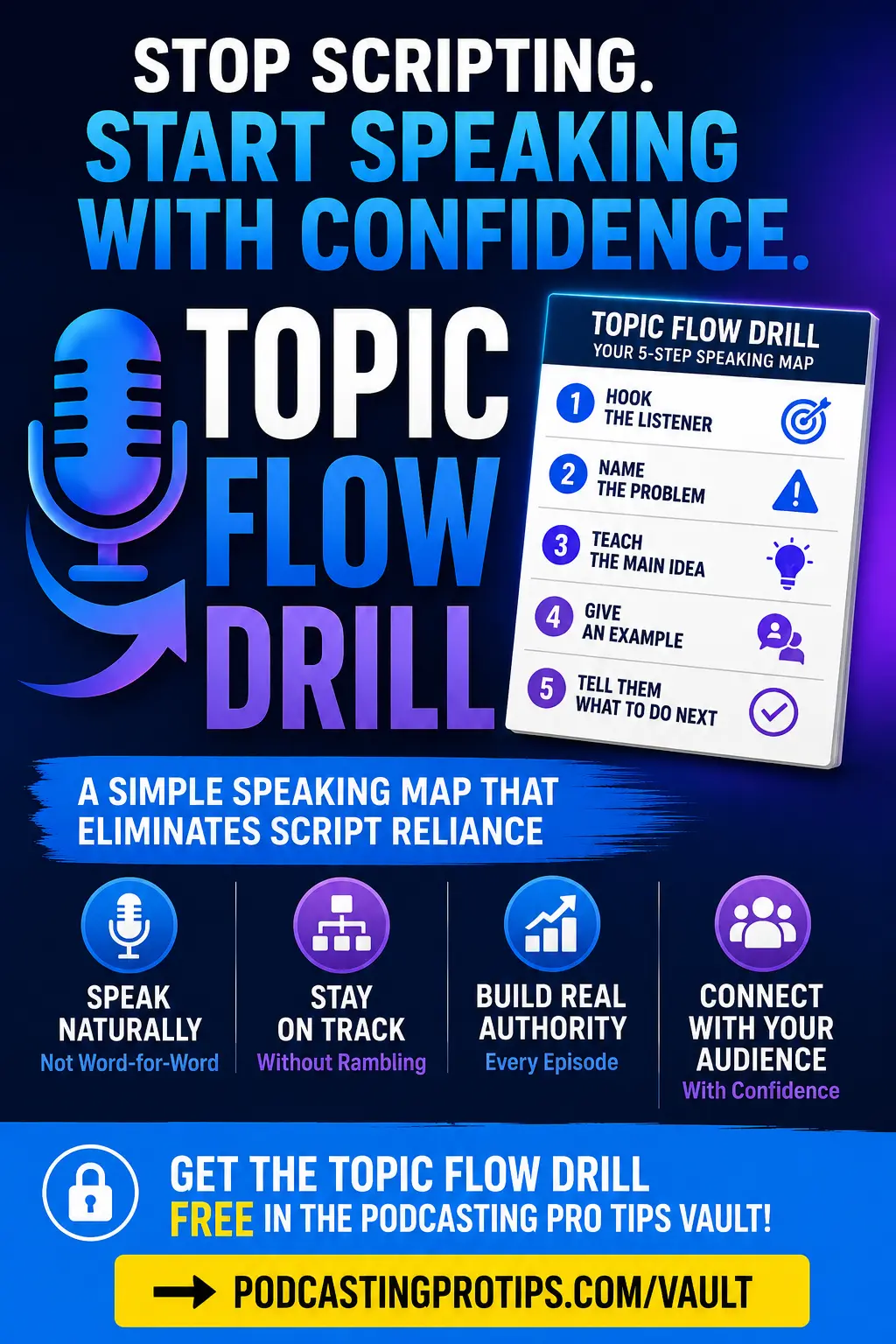
Try this structure:
- Hook the listener.
- Name the problem.
- Teach the main idea.
- Give an example.
- Tell the listener what to do next.
Now you’re not just practicing finishing. You’re practicing clarity.
Can you explain the idea without wandering into five related subjects?
Can you give enough context without spending half the episode setting up the point?
Can you finish while the idea still feels focused?
Those skills matter much more than whether your timer lands on exactly eight minutes or ten.
10–15 Minutes: Practice Structure
A 10-to-15-minute episode gives you room to teach something with multiple connected parts.
This works well for:
- a process;
- a method;
- a checklist;
- a framework;
- a specific point of view;
- a problem-solving walkthrough.
The danger is deciding that because you have 15 minutes, you should explain everything you know.
Don’t.
One episode still needs one job.
If you’re teaching a method, explain that method. If you’re walking through a checklist, walk through that checklist. You can always record another episode.
This is where some basic pre-production starts making a big difference. A useful outline gives you enough direction to stay on the road without scripting every sentence. If your episodes tend to wander, see my guide to podcast pre-production and planning before you record.
15–25 Minutes: Use the Extra Time for Actual Depth
A longer solo episode makes sense when the subject needs it.
Maybe you need to:
- explain a deeper framework;
- work through several examples;
- break down a case;
- challenge a common assumption;
- show how you think through a problem;
- walk through a complete process.
That’s useful depth.
Simply talking longer isn’t.
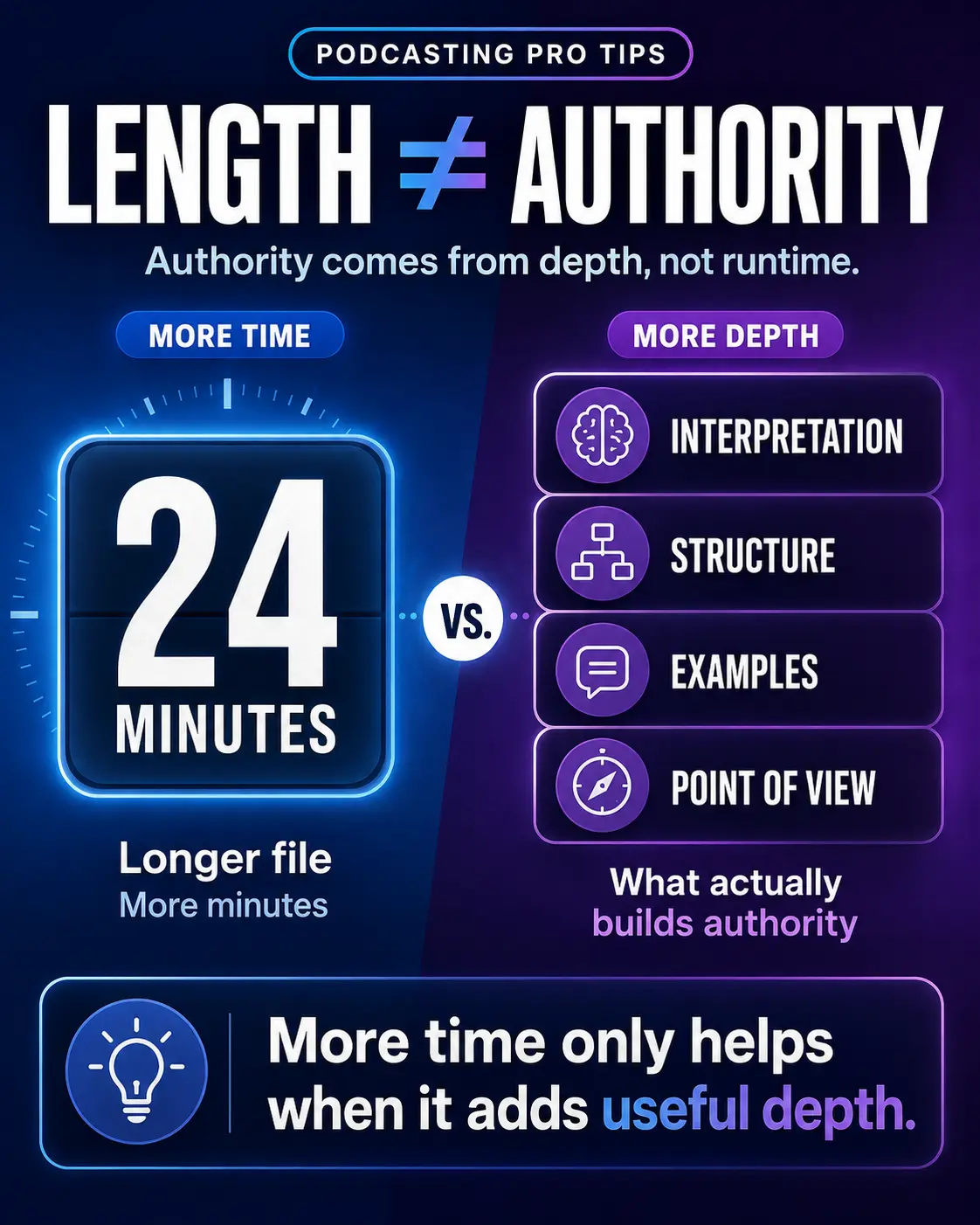
You don’t build authority because the file is 24 minutes instead of nine. You build it because the additional time contains useful interpretation, structure, examples, and point of view.
If you reach 15 minutes and the episode’s job is done, end it.
There is no prize for finding another 12 minutes of words.
How Do You Know Your Solo Episode Is Too Long?
Listen for repetition.
If you’re making the same point three different ways because you don’t know where to go next, the episode probably needs a tighter structure rather than more runtime.
Other warning signs include:
- long background sections before the useful point;
- side stories that don’t change the lesson;
- multiple topics competing inside one episode;
- repeating examples instead of adding new understanding;
- an ending that happened five minutes ago, but you’re still talking.
Try this test:
If you had to describe the job of the episode in one sentence, is everything in the recording helping it do that job?
If not, trimming can make the episode stronger.
Don’t Solve a Length Problem With a Full Script
When you’re worried about rambling, writing every word can feel like the obvious solution.
Sometimes precise scripting is useful. But if your larger goal is to become comfortable speaking naturally, a full script can create a different problem: now you’re trying to perform written language instead of explain an idea.
A speaking map gives you a middle ground.
You know where you’re starting, the main points you need to hit, the example you want to use, and where you’re ending. You don’t need to predetermine every sentence.
Your opening matters too. Instead of spending the first minute warming yourself up, create relevance quickly. My guide to building a stronger podcast opening goes deeper into that part of the episode.
Use Episode Length as a Practice Constraint
One reason these ranges work well for developing solo hosts is that each level asks you to practice a different communication skill.
Start with:
3–5 minutes → Finish
Then:
5–10 minutes → Clarity
Then:
10–15 minutes → Structure
Then:
15–25 minutes → Authority and depth
You don’t have to permanently “graduate” from short episodes.
Sometimes the best episode you’ll make next month will still be four minutes because four minutes is all the idea needs.
The point is that you can now choose deliberately.
Want to Speak Naturally Without Writing the Whole Episode?
If you know what you want to say but keep freezing, rambling, or falling back on a word-for-word script, start with The Topic Flow Drill: How to Eliminate Script Reliance and Speak with Natural Authority.
It gives you a speaking structure for organizing your main point, supporting ideas, example, recap, and CTA without scripting every sentence.
It’s free inside the Podcasting Pro Tips Vault.
Frequently Asked Questions
Is a five-minute podcast episode too short?
No. If you can answer one useful question or explain one clear idea in five minutes, the episode can be complete. Don’t add material merely to make the runtime look more substantial.
Is a 30-minute solo podcast too long?
Not automatically. The question is whether the topic genuinely needs 30 minutes. If the additional time contains examples, useful explanation, analysis, or a complete process, it may be justified. If you’re repeating yourself or drifting into unrelated ideas, shorten it.
How long should a beginner’s first solo podcast episode be?
A three-to-five-minute episode is a useful practice constraint. Choose one point, explain it, give an example, and finish. Once that feels comfortable, increase the communication challenge rather than simply increasing the timer.