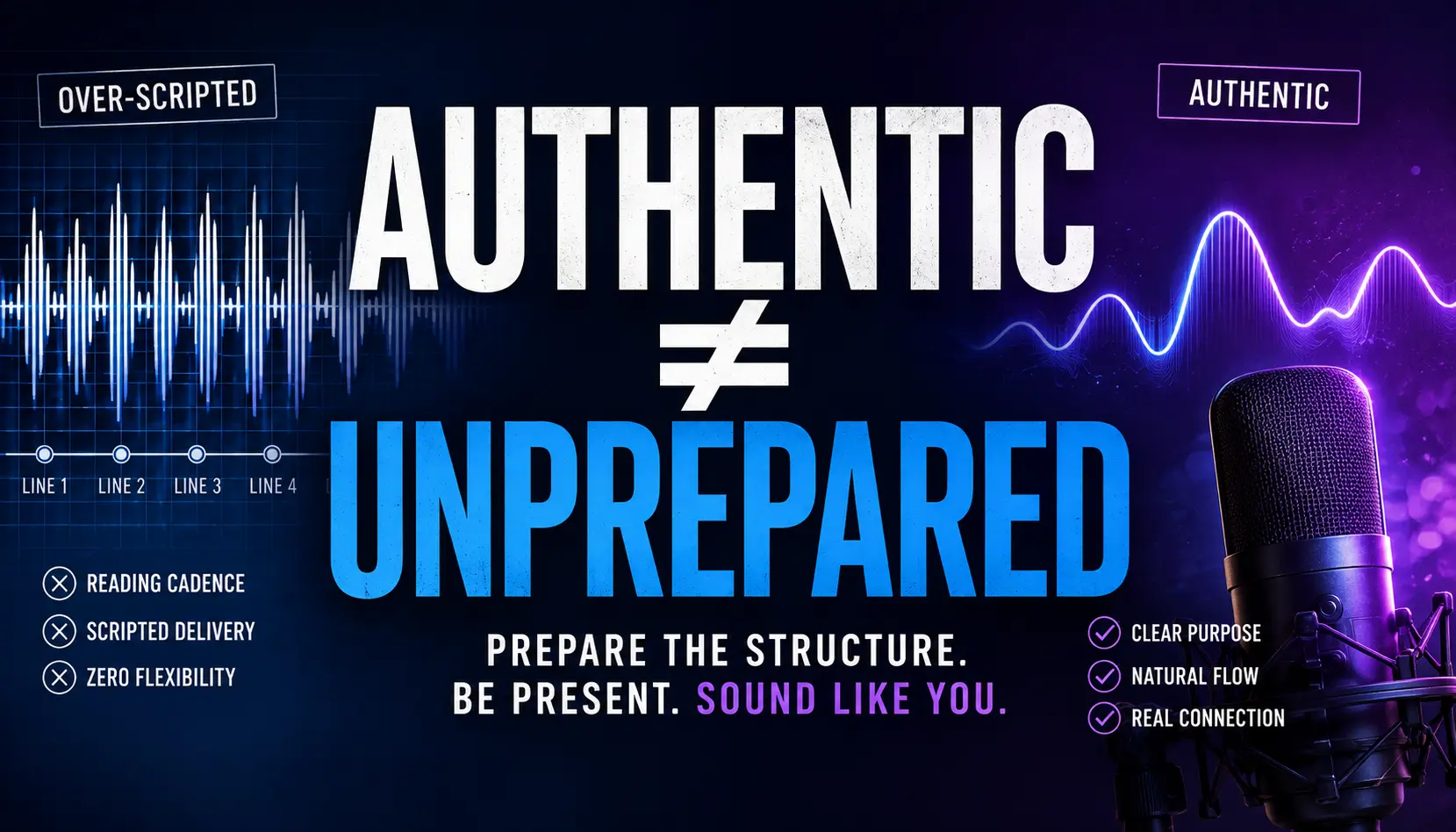
Podcast authenticity does not mean hitting record with no plan and hoping your personality carries the episode.
It also does not mean writing every sentence in advance and delivering it exactly as it appears on the page.
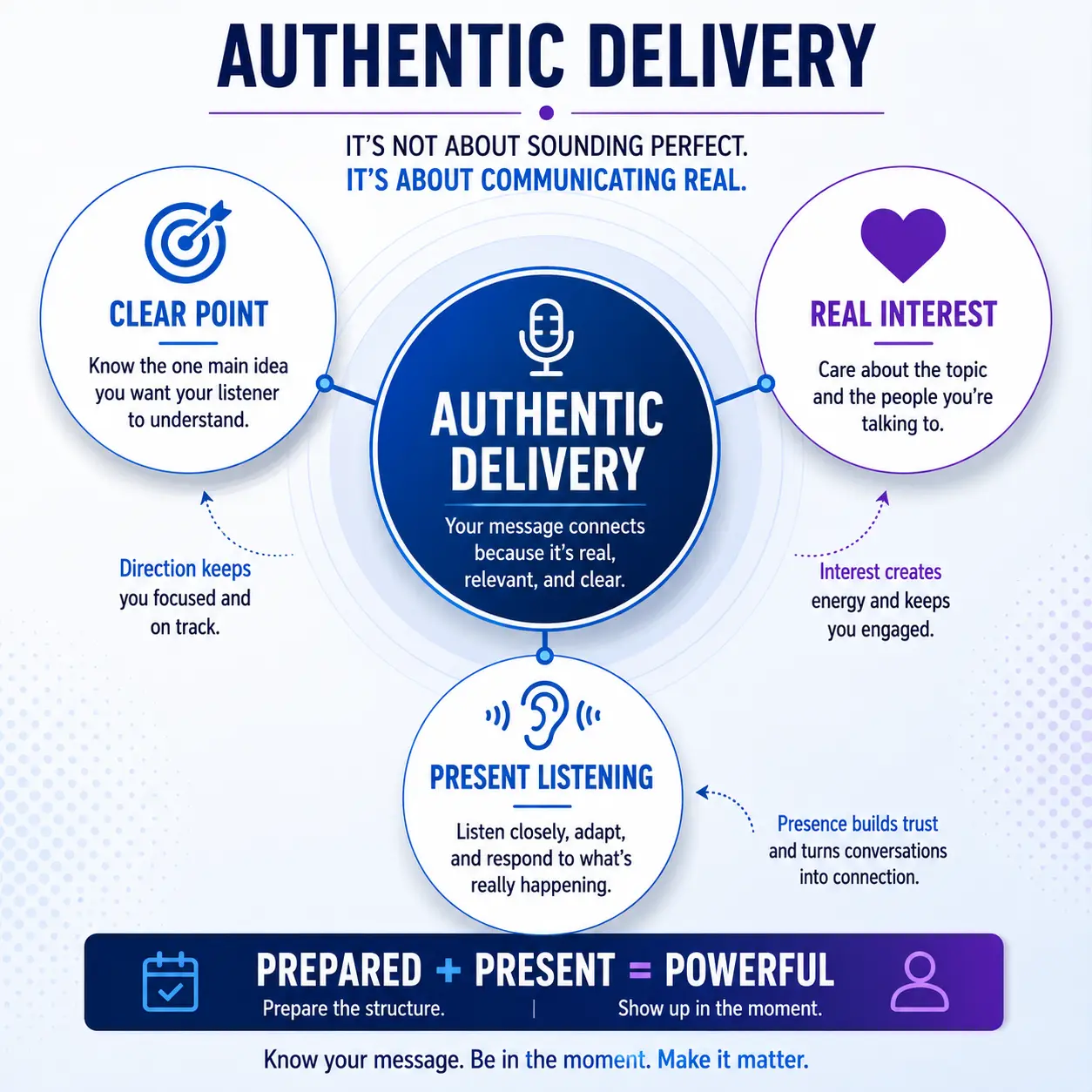
The better target is somewhere in the middle: prepared enough to know where you are going, but present enough to sound like yourself when you get there.
I used to describe authenticity, passion, and curiosity as three podcast “superfoods.” I still like the shorthand. But the useful part is understanding what those three things actually change in a recording.
They help you stop performing the role of “podcast host” and start communicating like a real person who knows why the conversation matters.
Authenticity Does Not Mean Winging It
One of the fastest ways to make a podcast feel unnatural is to over-script it.
The other is to under-prepare it.
Those problems can sound completely different, but they often come from the same mistake: you have not separated the ideas that need structure from the words that need to remain natural.
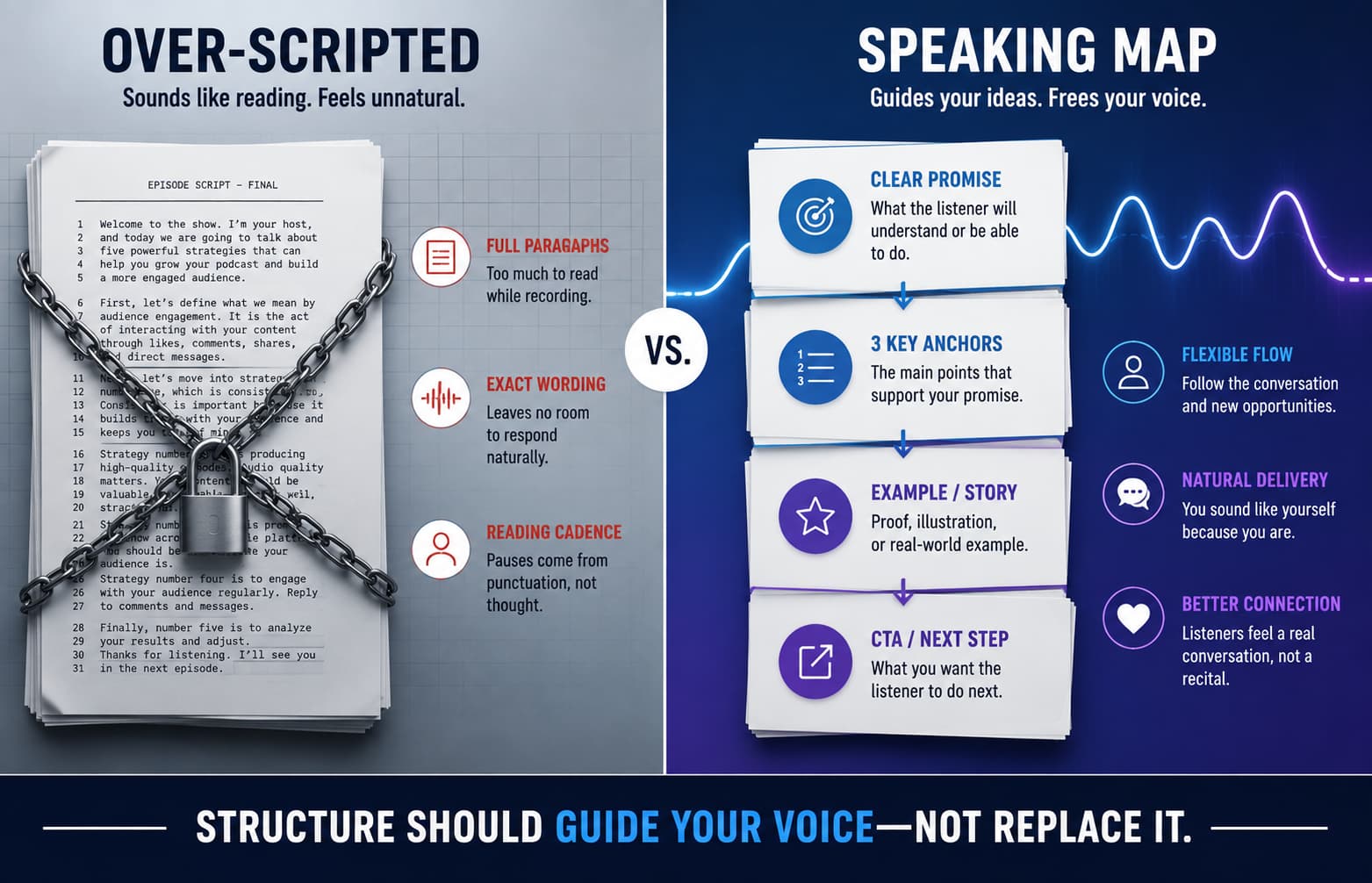
Good podcast pre-production should give you a safety net, not build a cage around you.
Before recording, you should usually know:
- who the episode is for;
- the problem or question you are addressing;
- the main promise;
- two or three important teaching points;
- an example, story, or piece of proof;
- where the episode should end;
- what you want the listener to do next.
That is structure.
You do not necessarily need to know the exact sentence you will use to explain every one of those points.
That is where your voice gets to show up.
An outline should carry some of the weight of remembering where you are going so you can spend more of your attention actually communicating the idea.
Why Over-Scripted Podcasts Sound Over-Scripted
There is nothing inherently wrong with a script.
I use tighter scripting when the wording matters: hooks, complicated explanations, transitions, CTAs, sponsor language, or anything where precision is important.
The problem starts when every ordinary thought gets locked into exact wording.
You can usually hear it.
The host stops explaining and starts reciting. Pauses happen because of punctuation instead of thought. Sentences that looked perfectly normal in a document suddenly sound like something no human being would say over lunch.
Here is a simple test.
Read one paragraph of your script.
Then look away from it and explain the same idea without trying to remember the words.
If the second version sounds more like you, you probably did not need a paragraph. You needed a few good speaking notes.
That is especially important when AI is involved. AI can help you research and organize ideas, but a generated question list or polished script can easily pull you away from the way you naturally communicate. I break that problem down further in the ChatGPT podcast interview-prep trap.
Use AI to help you think.
Do not automatically let it decide what you should sound like.
Passion Is Not the Same Thing as High Energy
You do not need to sound like you drank three energy drinks before recording.
Some of the best podcast delivery is calm.
Passion shows up in a different way: you actually have something at stake in the idea.
You have seen the problem.
You have an opinion about it.
You want your listener to understand something that matters.
That creates specificity.
Instead of choosing a topic only because a keyword tool says people search for it, ask:
- What question do I keep answering?
- What mistake do I keep seeing?
- What part of this subject genuinely bothers me?
- What do people regularly misunderstand?
- What would I still want to explain if only 20 highly relevant people heard the episode?
- What do I want someone to think or do differently afterward?
Those questions tend to produce stronger episodes because you are not manufacturing interest after the topic has already been chosen.
You already have a reason to talk about it.
This is also one reason solo podcast episodes can be so useful. They force you to make your own thinking visible instead of borrowing all the energy and authority from a guest.
Curiosity Is a Podcast Production Skill
Curiosity becomes especially important during interviews.
You can prepare 25 excellent questions and still conduct a weak interview if you are waiting for the guest to stop talking so you can ask question number six.
That is not really a conversation.
It is two people taking turns with a document.
Good interview preparation gives you direction. Good listening tells you when the conversation just gave you somewhere better to go.
That is the distinction behind active versus passive listening in podcast interviews.
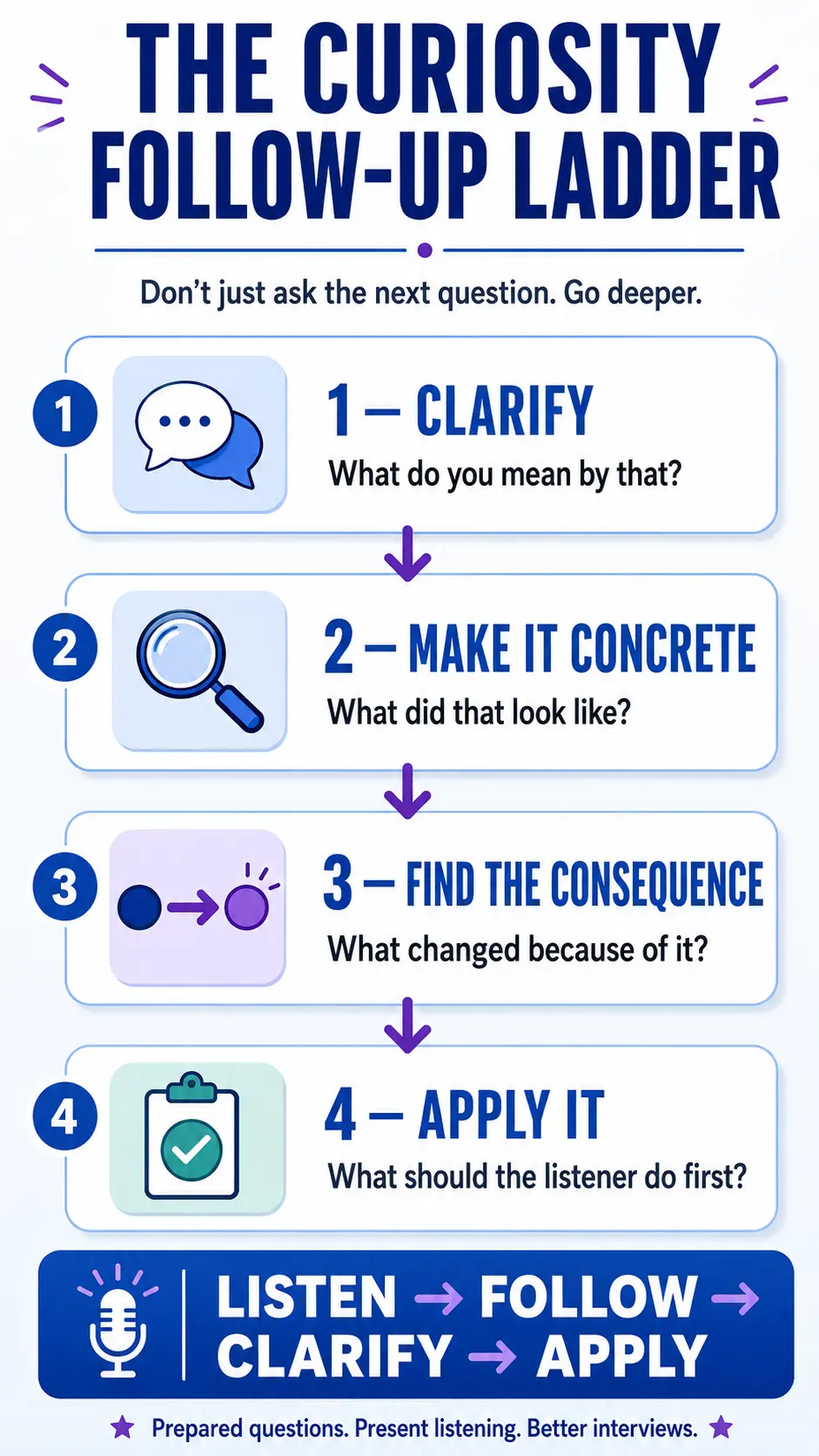
When a guest says something interesting, try moving through a simple curiosity ladder.
1. Clarify It
What did they actually mean?
“Hold on. When you say the campaign failed, what specifically went wrong?”
2. Make It Concrete
Can they give you an example?
“What did that look like when it actually happened?”
3. Find the Consequence
Why did that moment matter?
“What changed after you realized that?”
4. Bring It Back to the Listener
How can someone use this?
“If somebody listening is dealing with the same problem, what would you have them do first?”
Those questions are not complicated.
That is part of why they work.
Your job is not to impress the guest with how sophisticated your question sounds. Your job is to help the guest give an answer worth hearing.
And if a guest uses a term that you think part of your audience may not understand, stop them.
Ask.
“Back up for a second. What does that actually mean?”
Pretending everybody understood the jargon does not make the podcast sound smarter.
Making the idea understandable does.
Prepare the Destination, Not Every Footstep
A useful way to think about podcast preparation is to prepare the destination and a few important landmarks.
You know where the episode begins.
You know the main places it needs to visit.
You know where you want it to end.
But you do not need to pave every inch of the road before the conversation begins.
That leaves room for an unexpected example.
A better explanation.
A guest answer you did not anticipate.
A story you remember while teaching.
A question that suddenly becomes more important than the one sitting on your page.
That kind of spontaneity works better when there is structure underneath it.
Without any structure, “being authentic” can turn into 42 minutes of somebody trying to remember what their original point was.
That is not authenticity.
That is a production problem.
Try This Podcast Authenticity Check Before You Record
Before your next episode, answer six questions:
- Who am I actually talking to?
- What is the one useful thing I want them to understand?
- Can I explain the main idea without reading it?
- Do I have a real opinion, example, experience, or reason to care about this?
- Have I left enough room to respond naturally instead of following the plan mechanically?
- Does the next step at the end actually connect to what I just taught?
If those answers are clear, you probably do not need another three pages of script.
You need to record.
Authenticity Is Bigger Than Vocal Delivery
A microphone technique cannot make a confused podcast authentic.
If you do not know who the show is for, why the episode exists, what you believe about the subject, or what job the podcast is supposed to perform, eventually that uncertainty reaches the recording.
You start borrowing other people’s language.
You choose topics because other shows are covering them.
You ask generic questions.
You use AI copy you would never actually say.
You compensate by trying to “sound like a host.”
That is why authenticity is not completely separate from podcast strategy and production. A clear show gives you something real to say. Good preparation gives you a path through it. Then your personality, judgment, experience, humor, and curiosity have somewhere to go.
The goal is not to sound unpolished.
The goal is to sound like you on a good day—with a plan.
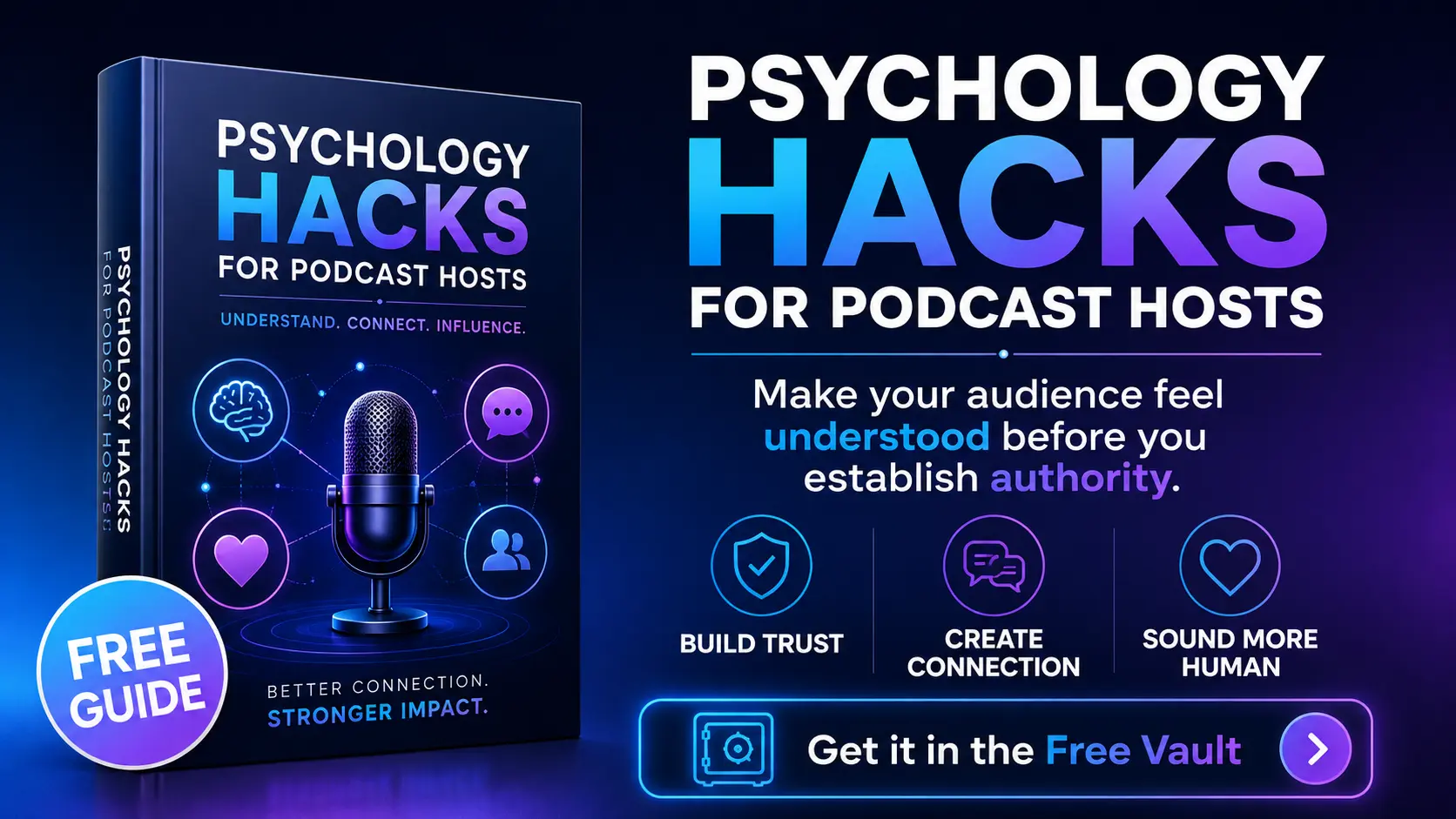
Want Your Audience to Feel Understood Before You Try to Impress Them?
If this article helped you think differently about authenticity and listener connection, the next step is Psychology Hacks for Podcast Hosts: How to Make Your Audience Feel Understood Before You Establish Authority.
It is included in the free Podcasting Pro Tips Vault and goes deeper into creating a listener-first connection without turning your episode into a résumé or performance.
Get the free guide inside the Podcasting Pro Tips Vault →
Podcast Authenticity FAQ
Should I script my podcast or use an outline?
Use the lightest structure that lets you stay clear and confident. Script wording-sensitive sections when necessary, but use a speaking outline for material you can explain naturally. You want direction without forcing yourself to reproduce every sentence exactly.
How can I stop sounding scripted on my podcast?
Know the idea before recording rather than memorizing the wording. Reduce ordinary paragraphs to short speaking prompts, explain the point aloud in your own words, and allow normal pauses, corrections, and conversational phrasing.
How can podcast hosts become better interviewers?
Prepare the purpose of the conversation and the important subjects you need to cover, then listen closely enough to follow strong answers. Clarifying questions, concrete examples, consequences, and practical application usually produce more useful follow-ups than mechanically moving through a long question list.